semiafro007: I'm going to make this pineapple disappear. TA DAH! it's magical.
Just like Hitler in little Nicky https://images.app.goo.gl/Qf331j2TNqwhLKx58
Mahyar: LAB REPORT: EXTREME MEDICAL REALITY EDITION
Clinical Reality: Level: Surgical Pathology
The human or anthro anorectal system is a fragile biological structure, not a mechanical loading port.
The anal canal is composed of stratified squamous mucosa, transitioning to simple columnar epithelium in the rectum. These layers tear under pressures far below what is required to insert a rigid, spiked botanical mass such as Ananas comosus (pineapple).
The region contains the internal anal sphincter (smooth muscle), external anal sphincter (striated muscle), levator ani complex, and the hemorrhoidal vascular plexus.
Attempting insertion of a pineapple may result in:
The rectum and colon naturally contain billions of microorganisms, including:
- Escherichia coli
- Enterococcus species
- Bacteroides species
- Clostridium species
- Prevotella species
In addition, the surface of fruits and other environmental objects may carry soil-borne or environmental microorganisms depending on handling and sanitation conditions.
When tissue is torn, these microorganisms can gain access to deeper tissues, the bloodstream, or the abdominal cavity, causing:
If fecal bacteria are transferred to the mouth, they may cause gastroenteritis, diarrhea, abdominal cramping, vomiting, and infection.
No biological organism, human, animal, or anthro, possesses "tractor-grade elasticity," "industrial-gasket sphincters," or "polycarbonate intestines."
These are R34 myths with no anatomical, physiological, or microbiological basis.
Hygiene Reality Check: Microbiology Edition
All digestive systems produce fecal matter containing Bacteroides, Lactobacillus, Clostridium, Prevotella, and numerous other members of the normal gut microbiota.
If fecal bacteria are transferred to the mouth, they may cause gastroenteritis, diarrhea, abdominal cramping, vomiting, and other gastrointestinal infections.
Fiction does not override physiology.
Bodies are not sterile.
Waste is not magical.
Hygiene is not optional.
Katia Managan: Biological Reality Edition
Katia has a digestive system, not divine armor.
She has fragile mucosa, not a reinforced tractor seal.
She has soft tissue, not a bulletproof polymer tube.
She has gut bacteria, and if those bacteria reach someone's mouth, there is a good chance of gastrointestinal illness. They may also cause diarrhea, abdominal pain, vomiting, and infection.
And she would not realistically attempt something as dangerous as inserting a pineapple unless she were severely intoxicated and exercising extremely poor judgment.
Even in that scenario, the most likely outcome would be superficial external injury, pain, skin contamination, and an immediate failure of the idea long before successful insertion became anatomically possible.
Even the dumbest fictional characters, yes, even Katia Managan, cannot override anatomy, physics, or microbiology.
Sources: Human anatomy, colorectal surgery, microbiology, infectious disease pathology, and basic reality.
Reducing the size of pineapple does NOT resolve the fundamental biomechanical and microbiological risks associated with anorectal foreign body insertion
The distal gastrointestinal tract is not sterile It contains dense microbial communities including Escherichia coli Enterococcus spp Bacteroides fragilis group Clostridium spp Prevotella spp
If mucosal integrity is disrupted abrasion laceration or micro-tears endogenous bacteria can translocate into deeper tissues or bloodstream leading to localized abscess formation severe soft tissue infection bacteremia sepsis septic shock in extreme cases
Simultaneously the surface of plant material including pineapple may carry environmental microorganisms depending on handling soil exposure and contamination compounding infection risk
Dual contamination mechanism:
1 External microbes enter damaged tissue via foreign object trauma
2 Internal gut flora such as E. coli and Bacteroides spp enter sterile compartments through the same lesions increasing infection probability and severity
If anorectal trauma occurs contamination is not theoretical It is immediate and predictable due to constant commensal gut flora
If gastrointestinal bacteria reach oral or non native regions exposure may lead to gastroenteritis diarrhea abdominal cramping vomiting and systemic infection in vulnerable hosts
Representative organisms include Escherichia coli Enterococcus faecalis Bacteroides fragilis Clostridium difficile and other dysbiosis associated pathogens
The gastrointestinal tract is a one way biological system ingestion digestion absorption elimination
It is not designed for reverse contamination cycles or foreign object trauma dynamics
The anus is a controlled exit pathway engineered for waste elimination not for foreign object entry though human behavior occasionally ignores basic anatomical design constraints
Tissue injury plus microbial exposure leads to infection amplification cascade standard medical pathology not theory
Why introduce trauma microbial exchange and infection risk into a biologically optimized exit pathway when Pineapple is already a food source designed for oral ingestion and safe metabolic processing
Consume it as fruit
Not a microbiological incident vector!

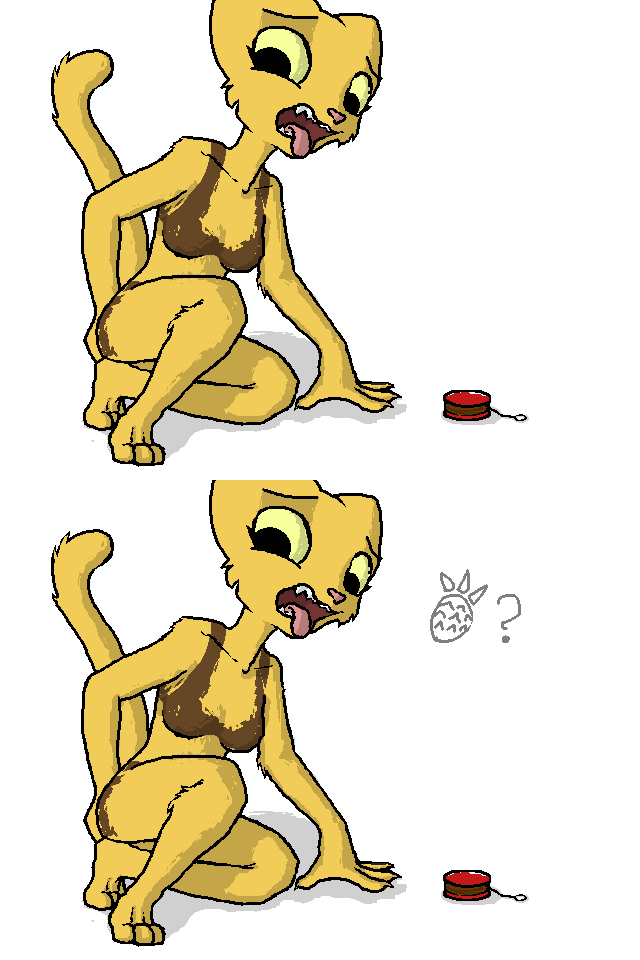
Describe This Image As Dramatically As Possible
- Reply
Just like Hitler in little Nicky https://images.app.goo.gl/Qf331j2TNqwhLKx58
- Reply
- Reply
- Reply
- Reply
- Reply
- Reply
- Reply
- Reply
- Reply
- Reply
Clinical Reality: Level: Surgical Pathology
The human or anthro anorectal system is a fragile biological structure, not a mechanical loading port.
The anal canal is composed of stratified squamous mucosa, transitioning to simple columnar epithelium in the rectum. These layers tear under pressures far below what is required to insert a rigid, spiked botanical mass such as Ananas comosus (pineapple).
The region contains the internal anal sphincter (smooth muscle), external anal sphincter (striated muscle), levator ani complex, and the hemorrhoidal vascular plexus.
Attempting insertion of a pineapple may result in:
- Severe mucosal laceration
- Sphincter injury
- Rectal wall perforation
- Fecal peritonitis
- Hemorrhagic shock
- Septicemia
- Multi-organ failure
The rectum and colon naturally contain billions of microorganisms, including:
- Escherichia coli
- Enterococcus species
- Bacteroides species
- Clostridium species
- Prevotella species
In addition, the surface of fruits and other environmental objects may carry soil-borne or environmental microorganisms depending on handling and sanitation conditions.
When tissue is torn, these microorganisms can gain access to deeper tissues, the bloodstream, or the abdominal cavity, causing:
- Severe soft-tissue infection
- Bacteremia
- Sepsis
- Septic shock
- Necrotizing infection
If fecal bacteria are transferred to the mouth, they may cause gastroenteritis, diarrhea, abdominal cramping, vomiting, and infection.
No biological organism, human, animal, or anthro, possesses "tractor-grade elasticity," "industrial-gasket sphincters," or "polycarbonate intestines."
These are R34 myths with no anatomical, physiological, or microbiological basis.
Hygiene Reality Check: Microbiology Edition
All digestive systems produce fecal matter containing Bacteroides, Lactobacillus, Clostridium, Prevotella, and numerous other members of the normal gut microbiota.
If fecal bacteria are transferred to the mouth, they may cause gastroenteritis, diarrhea, abdominal cramping, vomiting, and other gastrointestinal infections.
Fiction does not override physiology.
Bodies are not sterile.
Waste is not magical.
Hygiene is not optional.
Katia Managan: Biological Reality Edition
Katia has a digestive system, not divine armor.
She has fragile mucosa, not a reinforced tractor seal.
She has soft tissue, not a bulletproof polymer tube.
She has gut bacteria, and if those bacteria reach someone's mouth, there is a good chance of gastrointestinal illness. They may also cause diarrhea, abdominal pain, vomiting, and infection.
And she would not realistically attempt something as dangerous as inserting a pineapple unless she were severely intoxicated and exercising extremely poor judgment.
Even in that scenario, the most likely outcome would be superficial external injury, pain, skin contamination, and an immediate failure of the idea long before successful insertion became anatomically possible.
Even the dumbest fictional characters, yes, even Katia Managan, cannot override anatomy, physics, or microbiology.
Sources: Human anatomy, colorectal surgery, microbiology, infectious disease pathology, and basic reality.
- Reply
- Reply
Reducing the size of pineapple does NOT resolve the fundamental biomechanical and microbiological risks associated with anorectal foreign body insertion
The distal gastrointestinal tract is not sterile It contains dense microbial communities including Escherichia coli Enterococcus spp Bacteroides fragilis group Clostridium spp Prevotella spp
If mucosal integrity is disrupted abrasion laceration or micro-tears endogenous bacteria can translocate into deeper tissues or bloodstream leading to localized abscess formation severe soft tissue infection bacteremia sepsis septic shock in extreme cases
Simultaneously the surface of plant material including pineapple may carry environmental microorganisms depending on handling soil exposure and contamination compounding infection risk
Dual contamination mechanism:
1 External microbes enter damaged tissue via foreign object trauma
2 Internal gut flora such as E. coli and Bacteroides spp enter sterile compartments through the same lesions increasing infection probability and severity
If anorectal trauma occurs contamination is not theoretical It is immediate and predictable due to constant commensal gut flora
If gastrointestinal bacteria reach oral or non native regions exposure may lead to gastroenteritis diarrhea abdominal cramping vomiting and systemic infection in vulnerable hosts
Representative organisms include Escherichia coli Enterococcus faecalis Bacteroides fragilis Clostridium difficile and other dysbiosis associated pathogens
The gastrointestinal tract is a one way biological system ingestion digestion absorption elimination
It is not designed for reverse contamination cycles or foreign object trauma dynamics
The anus is a controlled exit pathway engineered for waste elimination not for foreign object entry though human behavior occasionally ignores basic anatomical design constraints
Tissue injury plus microbial exposure leads to infection amplification cascade standard medical pathology not theory
Why introduce trauma microbial exchange and infection risk into a biologically optimized exit pathway when Pineapple is already a food source designed for oral ingestion and safe metabolic processing
Consume it as fruit
Not a microbiological incident vector!